2026 Ineos Grenadier Utility Wagon or Quartermaster Which Body Style Suits Your Summer Adventures
July 31 2026,
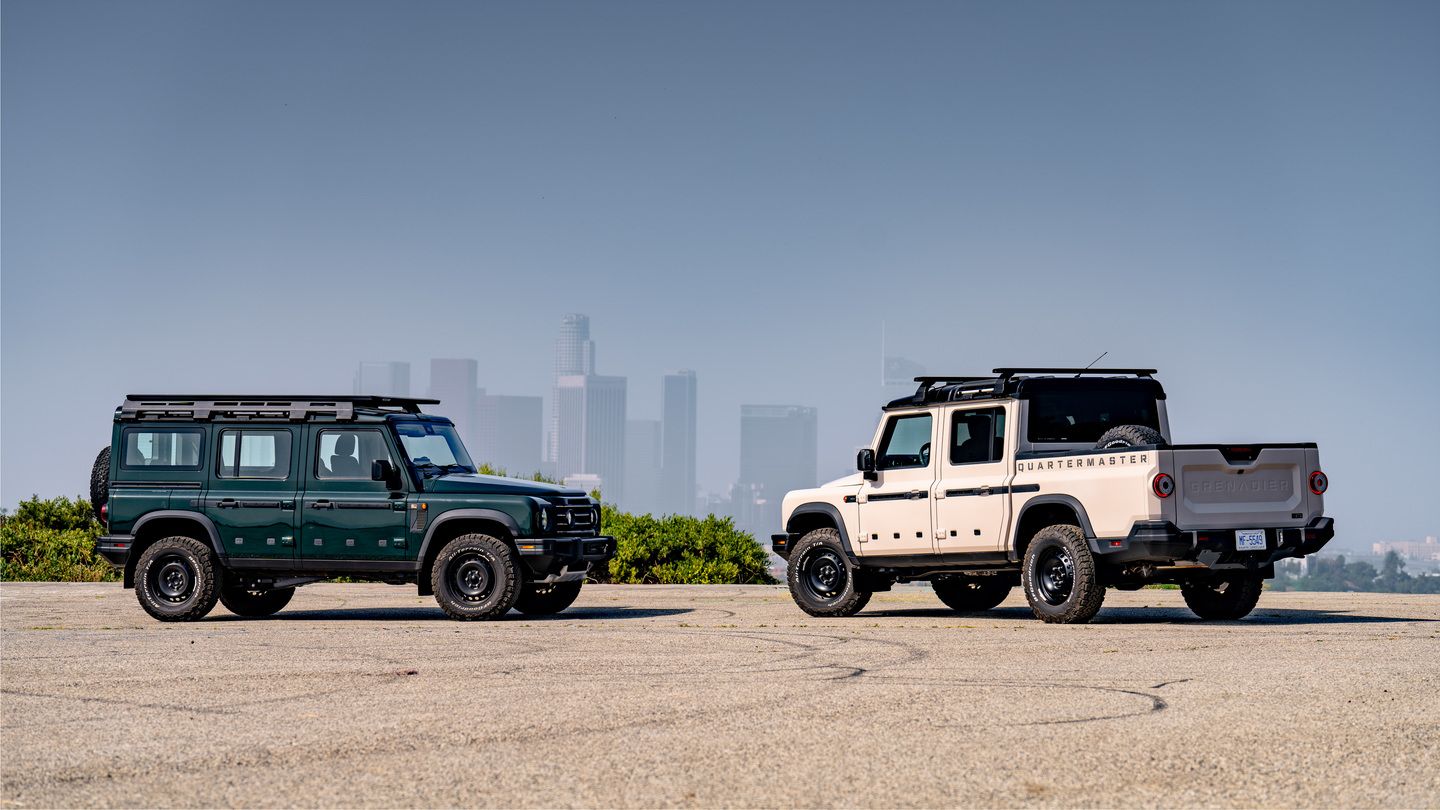
Choosing between the INEOS Grenadier Utility Wagon and the Quartermaster pickup often comes down to one summer weekend and how you plan to load it. Drivers across Quebec heading to a campground, a marina, or a job site need different things from their cargo space.
This comparison looks at how the two body styles differ in cabin feel, load access, and manoeuvring, plus which one handles a gravel road or a steep boat launch with less fuss. Both share the same engine and four-wheel-drive hardware underneath.
Grenadier Utility Wagon Vs Quartermaster: Side-By-Side Specs
|
Spec |
Utility Wagon |
Quartermaster |
|
Wheelbase |
2,922 mm |
3,227 mm |
|
Turning circle |
13.5 m |
14.5 m |
|
Ground clearance |
264 mm |
264 mm |
|
Approach angle |
35.5° |
35.5° |
|
Payload |
up to 1,920 lbs (871 kg), base two-seat |
up to 1,841 lbs (835 kg) |
|
Towing capacity |
7,716 lbs (3,500 kg) |
7,716 lbs (3,500 kg) |
|
Engine |
3.0L turbocharged I6, 282 hp / 332 lb-ft |
3.0L turbocharged I6, 282 hp / 332 lb-ft |
|
Transmission |
8-speed automatic |
8-speed automatic |
|
Drivetrain |
Permanent 4WD |
Permanent 4WD |
|
Touchscreen |
12.3-inch Central Control System |
12.3-inch Central Control System |
|
Seating |
5, or 2-seat layout available |
5, or 2-seat layout available |
Cabin, Seating and Everyday Comfort
Both body styles use the same Central Control System with a 12.3-inch touchscreen, the same eight-way Recaro front seats, and the same overhead control panel for off-road switches. Standard upholstery is a stain- and water-resistant cloth and vinyl in either vehicle.
The rear bench splits 60:40 with ISOFIX anchor points on the outer seats, and a dry storage box sits underneath. Five-seat passengers get an identical layout whether they’re riding in the Utility Wagon or the Quartermaster’s double cab, since the front and rear seating hardware doesn’t change between body styles.
What changes is what’s behind those rear seats. The Utility Wagon’s enclosed load area keeps gear, and any smell that comes with it, sealed away from the cabin. The Quartermaster’s open bed sits fully behind the cab, so nothing back there touches the passenger space at all.
Cargo and Load-Hauling For Summer Gear

The Utility Wagon’s rear opens through a 30/70 split tailgate, with the smaller door handling quick grabs and the larger door swinging wide for bulkier items. A cargo barrier and loadspace divider are available to keep coolers, luggage, and beach gear organized and dry.
The Quartermaster’s open bed measures 1,564 mm long, 1,619 mm wide, and 485 mm high, large enough for a standard 1,200 mm x 800 mm Euro pallet. Four tie-down rings, an integrated mounting bar, and a 400W power take-off keep loose or awkward loads secured, and the 1,280 mm tailgate supports up to 225 kg when open.
Payload favours the base two-seat Utility Wagon at up to 1,920 lbs (871 kg), ahead of the Quartermaster’s 1,841 lbs (835 kg). But the Quartermaster’s open bed handles muddy, oversized, or wet gear, firewood, ATV parts, job-site tools, without ever putting it near the interior.
Both body styles draw from the same factory accessory catalogue, so mounting gear isn’t a point of difference between them:
- Roof rack and cross-bars
- Bike carrier and dual kayak mounts
- Surfboard carrier
- Cargo box
Driving Feel, Manoeuvring and Trail Access
Underneath, the two body styles run the same hardware: the 3.0-litre turbocharged inline-six making 282 hp and 332 lb-ft, the same 8-speed automatic, the same 5-link front and rear suspension on Carraro beam axles, and the same permanent four-wheel drive with a 2-speed transfer case. In the Quartermaster, that engine returns a combined 16.0 L/100 km (16.9 city, 14.8 highway).
Ground clearance (264 mm) and approach angle (35.5°) are identical, so climbing a rutted campsite approach or fording a flooded lane feels the same in either vehicle.
The difference shows up in the turn. The Utility Wagon’s 2,922 mm wheelbase gives it a 13.5-metre turning circle, while the Quartermaster’s wheelbase, extended 305 mm to 3,227 mm for its cargo bed, widens that to 14.5 metres. That’s a noticeably bigger swing in a parking lot or a narrow forest road.
The Quartermaster’s own departure angle (22.6°) and breakover angle (26.2°) trail what the wagon body offers, a result of the extra length hanging behind the rear axle. Worth knowing before backing down a steep boat launch.
Which One Is Right for You?
For a family loading bikes, luggage, and a cooler for a lake weekend, the Utility Wagon’s enclosed, weatherproof cargo area and tighter turning circle make it the easier everyday companion. Gear stays dry, out of sight, and out of the weather.
For anyone regularly hauling oversized, muddy, or awkward loads alongside passengers, firewood, construction supplies, recreational equipment that shouldn’t ride inside the cabin, the Quartermaster’s open bed and load-bay hardware do a job the Utility Wagon’s enclosed hold can’t match.
Buyers who want a five-seat SUV that doubles as a gear locker will lean toward the Utility Wagon. Buyers who need an open bed for bulky or dirty cargo, with the same 4WD hardware underneath, will lean toward the Quartermaster.
Compare The Grenadier Utility Wagon And Quartermaster At HGrégoire Ineos Grenadier
The Grenadier lineup gives Quebec drivers two ways to pair the same off-road hardware with different cargo layouts, one sealed and weatherproof, one open and built for awkward gear.
Visit HGrégoire Ineos Grenadier in Laval to sit in both the Utility Wagon and the Quartermaster and compare which cargo layout fits your summer plans.