Can the 2026 Grenadier Quartermaster’s Factory Winch Recover You From a Stuck Trail?
September 02 2026,
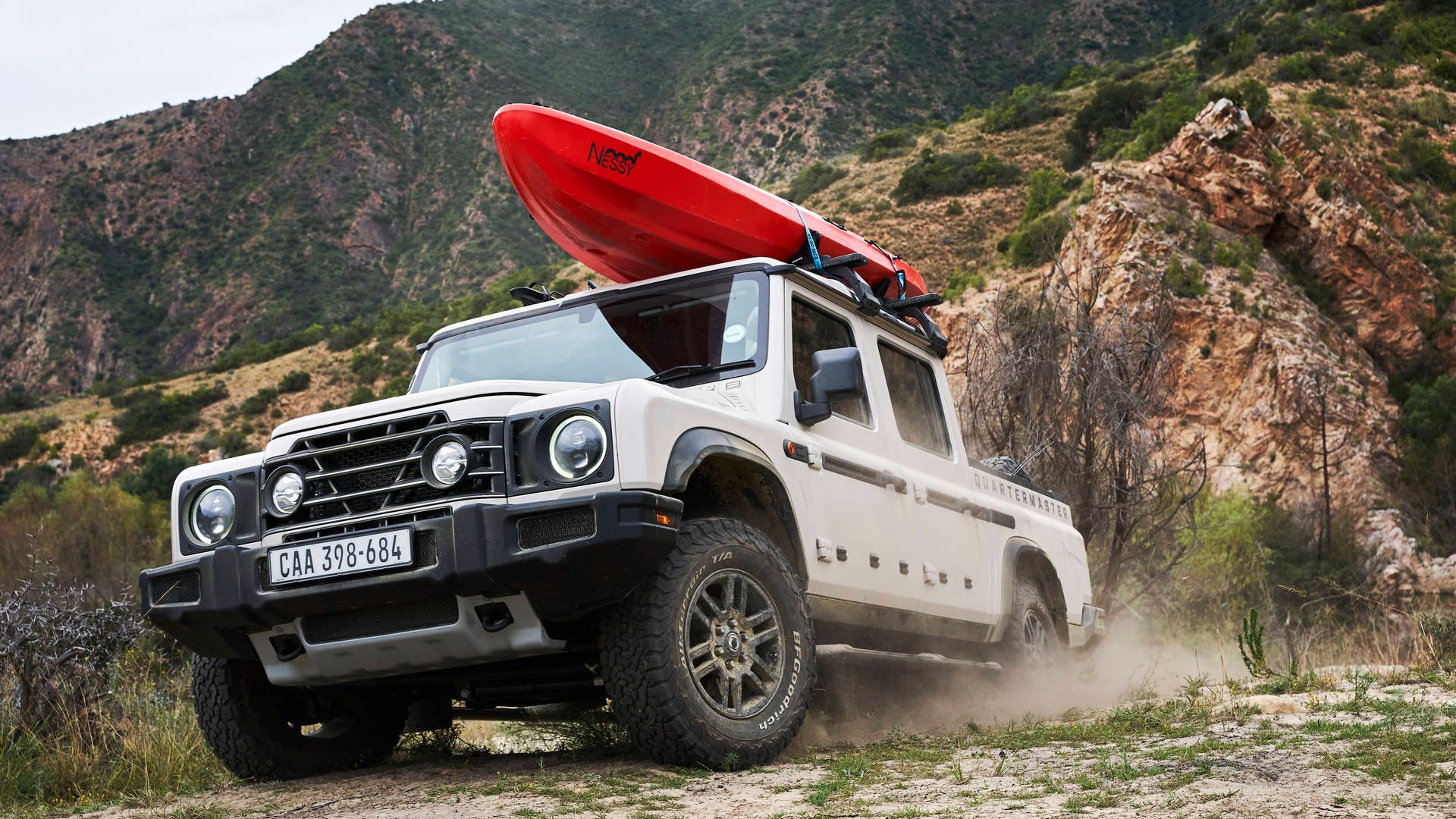
Fall in Quebec brings its own trail conditions: rain-softened gravel concessions, slick logging roads, and low-traction shoulders after a wet week. For rural operators and off-road drivers, getting stuck isn’t a hypothetical, it’s a Tuesday. The question is what tool actually gets you unstuck, and whether that tool belongs on a Grenadier Quartermaster built for backcountry work.
What The Factory Winch Actually Is
The Grenadier Quartermaster offers an optional, factory-fit front winch built by Red Winches, a NATO supplier, engineered specifically to integrate into the Grenadier’s front bumper rather than bolt onto it as an afterthought. It runs 13 metres of UHMWPE synthetic rope and delivers 5.5 tonnes (12,125 lbs (5,500 kg)) of winching power.
That matters because a factory-integrated winch is wired, mounted, and load-tested as part of the vehicle’s design, not fitted after the fact. The Grenadier’s overhead control panel even includes pre-wired auxiliary switches meant for accessories like winches, so the electrical groundwork already exists before you ever option one in.
An aftermarket winch, by contrast, means sourcing a compatible mount, running your own wiring, and hoping the bumper and frame can handle the load without reinforcement. The factory route removes that guesswork.
How It Works On The Trail
The winch doesn’t operate alone. It’s one piece of a chassis built around low-speed recovery. The Quartermaster’s two-speed transfer case, with a 2.5:1 low-range ratio, gives the driver fine control when easing out of a mud hole or repositioning before a pull. Electronically actuated front and rear differential locks, built by Eaton and standard on Trialmaster models, help put available torque where the tires still have grip.
Ground clearance sits at 264 mm, with an approach angle of 35.5 degrees, a breakover angle of 26.2 degrees, and a departure angle of 22.6 degrees. Those numbers determine whether the truck can even reach the point where a winch pull becomes necessary, or whether it clears the obstacle without one.
|
Off-Road Figure |
Quartermaster |
|
Ground clearance |
264 mm |
|
Approach angle |
35.5° |
|
Breakover angle |
26.2° |
|
Departure angle |
22.6° |
|
Wading depth |
800 mm |
In practice, the winch is used for controlled self-extraction, anchoring to a solid point like a tree or another vehicle and drawing the truck out under load, or for assisting a second stuck vehicle from a safe standoff distance.
Why It Matters For Real Quebec Driving

A winch is not the first answer to being stuck. Ground clearance, tire choice, and driving technique, like reducing tire pressure or picking a shallower line, solve most low-speed situations before a winch is ever needed. The Quartermaster’s standard Bridgestone Dueler all-terrain tires and the optional BFGoodrich All-Terrain KO2 tires with reinforced sidewalls are part of that first line of defence.
When those tools aren’t enough, mud, wet snow, slush, or a soft shoulder that’s swallowed a tire past the axle, the winch becomes the practical option. It lets a driver self-recover without waiting on a tow truck that may be hours away on a rural route, and it lets that same driver help a second vehicle stuck on the same trail.
Recovery gear has limits, though. A winch depends on a solid anchor point, a rope in good condition, and a driver who understands load angles. It is part of a system that also includes the underbody protection: front and rear skid plates and shielding for the 90-litre fuel tank guard the components a winch pull can’t protect on its own.
Where The Winch Fits With The Rest Of The Truck
The Quartermaster’s standard Pathfinder off-road navigation helps a driver plan a route and know what’s ahead before committing to a trail, reducing the odds of needing a recovery in the first place. The cargo bay adds four tie-down rings, a 400W power take-off, and an integrated mounting bar, useful for securing a recovery kit, straps, and a shovel alongside work equipment. The tailgate, at 1,280 mm wide, supports up to 225 kg when open for loading heavier gear.
Before heading out, it’s worth confirming that any planned recovery kit (shackles, straps, snatch blocks) matches the winch’s rope diameter and the vehicle’s factory-rated recovery points, rather than assuming aftermarket gear is a drop-in fit.
Who Actually Needs This
The factory winch suits owners who already expect to be off the beaten path regularly: rural property owners managing their own access roads, hunters working logging trails, contractors reaching remote job sites, and off-road hobbyists running expedition-style routes. For someone who occasionally drives gravel but mostly stays on maintained roads, the winch adds cost without regular use, and relying on occasional towing help remains reasonable.
For the driver who’s out there often enough that being stuck isn’t rare, the factory-integrated setup means one less variable to manage: no mismatched aftermarket mount, no separate wiring job, just a winch that was engineered into the truck from the start.
A winch also isn’t a substitute for professional recovery in every case. A vehicle stuck on unstable ground, near water, or at a severe angle is a job for a tow operator with the right equipment, not a solo self-extraction.
Basic upkeep matters too: keeping the rope free of debris, checking the mounting hardware periodically, and never standing in the rope’s line of pull during a winch operation are simple habits that keep the system reliable when it’s actually needed.
Talk To HGrégoire Ineos Grenadier About The Quartermaster
The Grenadier Quartermaster pairs a factory-integrated winch with the geometry, drivetrain hardware, and underbody protection needed to back it up on demanding Quebec trails. Together, they form a recovery system built into the truck rather than added to it.
Visit HGrégoire Ineos Grenadier in Laval to see the Quartermaster’s off-road equipment in person and find out which configuration fits how you actually use a truck.